Friday, 24 July 2015

Zambia Successfully Issues US$ 1.25 Billion Eurobond

NEW YORK, Thursday, July 23, 2015 – Zambia on Thursday successfully issued the targeted amount of US$1.25 billion Eurobond for infrastructure development.

The Zambian team and representatives of Joint Lead Managers, Duetsche Bank and Barclays after Zambia successfully issued a US$1.25 billion Eurobond. PHOTO | CHIBAULA D. SILWAMBA | ZAMBIA UN MISSION
The Eurobond, with a coupon rate of 8.97 per cent, has an eleven-year average life with repayments in 2025, 2026 and 2027.
This issuance is in line with prudent debt management practices of the Government of the Republic of Zambia that will ensure a sustainable debt redemption profile.
The bond issuance that is in excess of two times oversubscribed, demonstrates investor confidence in the economic governance of country.
Finance Deputy Minister Honourable Christopher Mvunga, who led the Zambian delegation, said this success demonstrates confidence that the international financial community has in the leadership of His Excellency, Mr. Edgar Chagwa Lungu and the Patriotic Front (PF) Government.
“As the case has been in the past, the funds will be used in infrastructure related projects in the area of road, energy, education, health, water and transport sectors in order to better the lives of the Zambian people,” Mr. Mvunga said.
The Minister emphasized that the Government would strictly adhere to the programmed use of the resources.   
 “The fiscal consolidation measures outlined to the investors in the presentations will strictly be adhered to,” he said.
Mr. Mvunga said this was an opportune time for Zambia to issue bonds given the anticipated rising interest cost in the international markets in the near future.
Despite a challenging capital markets environment arising from global economic uncertainties, Zambia’s bond issue was met with high demand from international investors allowing the country to lock-in a competitive interest rate.
The Zambian delegation met over 60 fund managers during the five-day road show in the United Kingdom and the United States of America.
Mr. Mvunga committed that going forward, Zambia will conduct annual investor meetings to ensure transparent communication of the performance of the economy.
The delegation included the Secretary to the Treasury Fredson Yamba, Special Assistant to the President (Project Monitoring and Implementation) Lucky Mulusa, Permanent Secretary (Budget) Pamela Kabamba, the Deputy Governor of the Bank of Zambia (Operations) Bwalya Ng’andu and senior Government officials from the Ministry of Finance and the Bank of Zambia.
Issued by:
CHIBAULA D. SILWAMBA (Mr.)
First Secretary for Press and Public Relations
Permanent Mission of the Republic of Zambia to the United Nations
www.zambiaun.com Mobile: +16462405430, Email: chibaula@zambiaun.com

Tuesday, 21 July 2015

SDGs present valuable opportunities for Zambia – Mvunga

By Mutale Kapekele

Finance deputy minister, Christopher Mvunga, says the timing of Sustainable Development Goals presents a valuable opportunity for Zambia to synchronize them in the Seventh Development Plan, which will take effect from 2017 to 2021 and is currently being formulated.

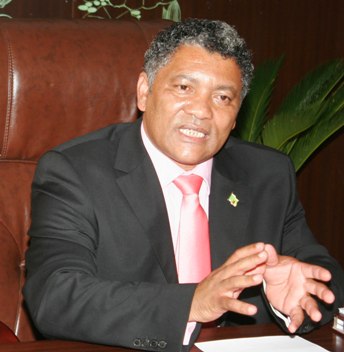
Christopher Mvunga - Picture by Chibaula Silwamba
Mvunga was speaking when he delivered Zambia’s statement at the 2015 Annual Ministerial Review (AMR) meeting, a segment of the UN Economic and Social Council (ECOSOC) High-Level Political Forum on Sustainable Development at UN Headquarters in New York last week.
The SDGs – a proposed set of targets relating to future international development – will be adopted by Heads of State and Government to replace MDGs at the latter’s expiration during the UN Summit for the adoption of the Post-2015 Development Agenda to be held from 25 to 27 September 2015 in New York.
Several speakers at the High-Level Political Forum called on Member States to place greater emphasis on national planning institutions and processes that could efficiently coordinate development programs.
Mvunga said the new global development agenda for sustainable development should fully address the specific needs of all countries in special situations such as Landlocked Developing Countries (LLDCs) and Least Developed Countries (LDCs).
The Deputy Minister said SDGs accorded Zambia, and other countries, a great opportunity to decisively deal with the “unfinished business” carried over from the Millennium Development Goals (MDGs).
Mvunga said Zambia’s transition to the domestication of SDGs would be based on multi-sectorial engagement of stakeholders, recognition of the goals as universally applicable and promotion of partnerships in a transformative manner.
He said Zambia’s development plans were premised on promoting a sound macroeconomic management as a pre-requisite to attracting investment, expansion of employment opportunities and creating fiscal space to support infrastructure and human capital development.
Mvunga said the current sound macroeconomic environment, and existing policy framework gives Zambia an avenue to translate growth into tangible human development outcomes in an integrated manner.
As part of the Annual Ministerial Review, four countries – Zambia, Kyrgyzstan, Mongolia and Philippines – will make National Voluntary Presentations on their progress in implementing the internationally agreed development goals, including the MDGs, and the transformation to the Post-2015 Development Agenda.
Zambia UN Mission Chargé D'Affaires Christine Kalamwina, ministry of finance director of national planning Chola Chabala and principal planner Pamela Kauseni accompanied the deputy minister to the meetings. Ahead of the National Voluntary Presentation, Mr. Mvunga separately met and exchanged views with US Mission to UN Acting Representative to the Economic Social Council (ECOSOC) Ambassador Richard Erdman and Swedish Mission to UN diplomat Daniel Pettersson.
Sweden and US will review Zambia’s presentation.
This is according to a statement made available by First Secretary for Press at the Zambian Mission at the United Nations, Chibaula Sil

OECD, UNDP to boost tax collection in developing countries

By Mutale Kapekele

A new initiative that will help developing countries like Zambia to bolster domestic revenues by strengthening their tax audit capacities has been launched by the Organization for Economic Cooperation and Development (OECD) and the United Nations Development Programme (UNDP).
The Tax Inspectors Without Borders (TIWB) project, which will help countries mobilize domestic revenue in support of the post-2015 Sustainable Development Agenda (SDGs), was announced on July 13 at the third International Conference on Financing for Development in Addis Ababa.
Debt redden Zambia is one of the beneficiaries of the TIWB, which will facilitate targeted tax audit assistance in developing countries worldwide. Tax audit experts will work alongside local officials of developing country tax administrations to help strengthen tax audit capacities, including issues concerning international tax matters.
A number of pilot projects and international tax workshops are already underway, including in Albania, Ghana and Senegal. Evidence gathered from real time cases in Colombia indicate a significant increase in tax revenue, from USD 3.3 million in 2011 to USD 33.2 million in 2014, thanks to tax audit advice and guidance.
“The challenges faced by developing countries are being acknowledged internationally and we are delighted to mobilize the best experts worldwide in a practical contribution to domestic resource mobilization,” OECD Secretary-General Angel Gurría said during a launch event in Addis Ababa. “The new partnership between the OECD and UNDP on Tax Inspectors Without Borders will significantly extend the global reach of existing efforts to build audit capacity while sending a strong message of international support to developing countries.”
And UNDP Administrator Helen Clark said "effective domestic resource mobilization is at the core of financing for sustainable development but efforts to raise domestic resources are often constrained by tax evasion and avoidance, and by illicit financial flows.”
Clark explained that the Tax Inspectors Without Borders programme is an “innovative and practical way of supporting developing countries to mobilize more domestic resources for development.” She added that with its country level presence and local knowledge, UNDP is well-placed to partner with the OECD and the best audit experts to scale-up this important work.
A dedicated central organizing unit, the TIWB Secretariat, supported by an oversight board of stakeholders, will operate as a clearing house to match the demand for auditing assistance with appropriate expertise. The Secretariat, composed of OECD and UNDP staff and based at the OECD in Paris, will facilitate full-time or periodic deployment of experts.

A TIWB Toolkit sets out guidelines for establishing TIWB programme and protecting against potential confidentiality and conflict of interest concerns.

Monday, 20 July 2015

African infrastructure investment top priority for continent - Prof Jeffrey Sachs

Prof Sachs
By Mutale Kapekele

Closing Africa’s infrastructure gap is a top priority in order to put the continent on a path for double digit growth and sustainable development. This is according to world-renowned professor of economics, Jeffrey Sachs.
Last week, Zambia joined thousands of delegates who assembled in Addis Ababa, Ethiopia to set the new financing architecture for a new global partnership. The event themed “Unlocking Public and Private Capital for African Infrastructure” was organized by the New Partnership for Africa’s Development (NEPAD) Agency and Sustainable Development Solutions Network (SDSN).
“There is no choice, Africa needs 10 per cent per year of economic growth in the next 15 years,” Professor Sachs said. The only way to achieve this, according to him, was to focus on large-scale investments in trans-national infrastructure projects in power, roads, broadband, and other core regional infrastructure needs.
Sachs, director of the SDSN and Special Advisor to UN Secretary-General Ban Ki-moon on the Millennium Development Goals, spoke on the side-lines of the Third Financing for Development Conference in Addis Ababa, Ethiopia. Thousands of delegates have descended on Addis Ababa to set the new financing architecture for a new global partnership.
Middle East and Africa IT infrastructure spending to reach $3.4 ...
Africa needs more of such projects 
For Africa to realize the 2030 timeframe, Sachs, urged the global community to rally around the NEPAD agenda, as the continent’s strategy for implementing cross-border infrastructure projects.  “We need to help support NEPAD achieve its goals”, he said.
The NEPAD Agency has identified Africa’s most important infrastructure needs within the context of the Programme for Infrastructure Development in Africa (PIDA), which provides the framework to implement 51 priority programs and projects in the sectors of energy, transport, broadband and trans boundary water.
Speaking on the issue of how to crowd in investment, Sachs encouraged African economies to forge partnerships with East Asia, tap into capital markets and strengthen continental bodies such as the NEPAD Agency and African Development Bank.
Chief Executive Officer of the NEPAD Agency, Dr. Ibrahim Mayaki, highlighted that Africa’s challenge was not a lack of resources, but a lack of bankable projects. “We need to invest in the capacity to invest”. It is about proposing structured projects, he said. 
Mayaki mentioned the complementary instruments that have been developed to build the necessary capacity for early-stage project preparation and the Africa50 Fund to finance the implementation of PIDA and other regional infrastructure projects.
Mayaki also underscored the important role of Regional Economic Communities in providing the enabling environment for project implementation, through harmonized policies and regulatory frameworks.
The best way for Africa to achieve its infrastructure goals was to tap into a Global Infrastructure Investment Platform (GIIP), he said. The objective of GIIP was to put forward an ambitious proposal that would allow long-term investors to ramp up their infrastructure asset holdings, with an allocation target of up to 10 percent of assets under management over a 15 year horizon.
The event brought together leading representatives from the private and public sector, as well as global think tanks.
The NEPAD Agency, SDSN, UN Conference on Trade and Development (UNCTAD) and Washington-based think tank Brookings Institution, agreed to set up a working group that will move Africa’s regional infrastructure financing agenda forward.


Illicit Financial Flows: How money is syphoned out of Zambia


By Mutale Kapekele
‘The mines do not pay enough tax. Multinationals are hemorrhaging money from the economy.’ Those are comments we hear every day.
It is true that ‘common’ Zambians pay more in tax than some of the big organizations. This is mainly due what the world has come to know as illicit financial flows.
By definition, illicit financial flows, in economics, refers to a form of illegal capital flight and occurs when money is illegally earned, transferred, or spent. This money is intended to disappear from any record in the country of origin, and earnings on the stock of illicit financial flows outside of a country generally do not return to the country of origin.
According to a new report from an African Union and Economic Commission for Africa panel chaired by former South African President Thabo Mbeki, more than US$50 billion is estimated to leave the African continent due to corporate tax evasion, corruption, and criminality.
The outflow dwarfs the amount of official development assistance entering the continent. The problem is coupled by aggressive profit shifting tactics utilized by multinational corporations to avoid taxes in the resource rich countries where they operate.
And according to the Global Financial Integrity (GFI) research, US$991.2 billion was funneled out of developing and emerging economies through crime, corruption and tax evasion in 2012 alone.
In Zambia, reports by ActionAid published in 2011 and 2013 examined the tax practices of two of the world’s largest food and beverages multinationals. The results left bitter tastes in the mouths of many Zambians.
ActionAid zoomed in on Zambia Sugar, a subsidiary of the Associated British Foods (ABF) group, which produces staple brands like Silver Spoon sugar, Kingsmill bread, Ryvita and Patak’s, and also owns clothing chain Primark.
ActionAid’s investigation found that ABF’s Zambian subsidiary used an array of transactions that have seen over a third of the company’s pre-tax profits – over US$13.8million (Zambian Kwacha 62 billion) a year – paid out of Zambia, into and via tax haven sister companies in Ireland, Mauritius and the Netherlands.
“Some of these transactions reduce Zambia Sugar’s taxable profits, while the structure of others avoids the Zambian taxes ordinarily levied on treaty between Zambia and Ireland, which prevents the Zambian government from charging any of the tax that would normally be levied on the interest payments made on these loans. Order a tax-free takeaway: Zambia Sugar is able to send profits back to its parent company, Illovo Sugar Ltd, nearly tax-free by re-shuffling the ownership of the company through a string of Irish, Mauritian and Dutch holding companies, taking advantage of tax treaty loopholes and tax haven regimes to cancel tax on its dividend payments.”
A similar report produced two years earlier, revealed how SABMiller, the world’s second largest beer producer, whose brands include Grolsch, Peroni and Miller, and African beers Castle and Stone Lager, was siphoning profits out of Zambia and other developing countries and parking them offshore.
SABMiller’s companies in Zambia include National Breweries, the producers of Shake Shake and the Zambian Breweries, the brand owners of Mosi Larger among other products.
The two institutions rejected ActionAid's interpretation of their business structures and denied that involvement in aggressive tax planning in any part of their operations.
According to the Global Financial Intelligence, despite growing awareness, developing countries lose more money through illicit financial flows (IFF) than they gain through aid and foreign direct investment. GFI reports that IFFs are continuing to grow at an alarming rate of 9.4 percent a year.
Raymond Baker, GFI says IFFs continue to grow because it remains so easy to do. “We have not turned the tide on the ease with which money can be shifted out of developing countries.”
There are lots of ways to get money out of a country undetected but the easiest is through trade misinvoicing, which is the overpricing of imports and the underpricing of exports – and accounts for “77 percent of all illicit financial flows.”
“Suppose you live in Cameroon,” says Baker, “and want to get money out. As an importer, you ask your supplier abroad to increase the price by 20 percent and invoice you for 120 percent. When you pay, that extra 20 percent is put into an account for you.”
The practice works in exactly the same way for exports: an exporter sells a product for less than it’s worth (50 percent) so that the balance of its true value (the remaining 50 percent) is paid into a foreign private account instead.
As these flows by their very nature are intended to be kept secret, GFI combs through balance of payments data that governments submit every year with the International Monetary Fund. They also look for gaps in trade statistics: “If Cameroon says it exported US$100m to France but France says it imported $300m, then exports have been underpriced by US$200m,” explains Baker.
Advising its clients on how to avoid transfer pricing audits by the Zambia Revenue Authority, the accounting firm PricewaterhouseCoopers (PWC) gave three examples of business practices which were likely to be questioned.
These included procurement of management and financial services from related parties (companies in the same global group) and also buying goods from related companies.
On management services PWC advised companies to watch out if their “management services were provided from a low tax jurisdiction such as Mauritius or Bermuda. PWC also advised that the ZRA raises a red flag on “loss making companies, management fees based on turnover of the local company, or a fully-fledged local operation that does not warrant provision of management services, lack of evidentiary support of provision of management services and lack of evidence of benefit derived by the local company from such services.”
On procurement of goods, PWC advised that ZRA pounced on companies whose goods recorded “loss gross margins as compared to industry averages, purchase of goods from low tax jurisdictions, loss making or bulk of cost of sales made up of related party purchases. The other red flag mentioned was the “absence of evidence of the arrangements between the vendor and purchaser such as written agreements and transfer pricing documentation.”
For financial assistance, PWC advised companies to avoid “thinly capitalizing local companies, contracting related part high interest loans rates as compared to the market, financial assistance provided from a low tax jurisdiction and high guarantee fees as compared to the market.” The other advice point was “absence of evidence of the arrangements and transfer pricing documentation.
“Where your company has cross border transactions with related parties, it is highly recommended that you begin the process of compiling transfer pricing documentation in preparation for audits by the ZRA,” advised PWC.
From the advice provided by PWC, it is clear that there are legal loopholes that can be employed to avoid ZRA audits. The same is true when it comes to avoiding tax.
Avoiding tax using legal provisions is not a crime in Zambia but the practice is immoral and deprives the country of the much needed resources for economic growth.
Zambia is not the only affected country as IFFs have a global face. This is a complex issue that will take a long time to end and everyone should stand up to those involved.


Conservation Farming Pays

http://conservationagriculture.org/uploads/pdf/Conservation_Farming_Pays_-_Grey_Mweemba.pdf

Friday, 17 July 2015

Government stops import permits for poultry products without PAZ nod

By Mutale Kapekele

Given Lubinda
The ministry of agriculture will not issue any import permits for poultry products without consulting the Poultry Association of Zambia (PAZ), Given Lubinda has directed.
Lubinda, who is agriculture minister, made the directive during the official opening of the 2015 PAZ Annual General Meeting that took place on Friday 19th June in Lusaka.
He said poultry imports will not develop the country and that it will destroy local industry. Lubinda tasked the PAZ to monitor any suspicious imports of poultry products and alert the ministry for action.
On the importation of Mechanically Deboned Meat (MDM), Lubinda informed members of PAZ that his ministry will engage the ministry of finance and Zambia Revenue Authority (ZRA) to develop specific codes for identifying MDM and avoid confusing the commodity for chicken.
He also disclosed that his ministry was currently engaging with chain stores to buy poultry locally in order to protect local farmers.
Speaking earlier, Zambia National Farmers Union president, Dr Evelyn Nguleka and appealed to the Government to address the issue of cheap poultry import, which said had the potential to destroy the local poultry industry.
On the issue of poultry statistics, the Lubinda urged players in the poultry sector to ensure that they provided the Government with transparent and accurate statistics in order to inform policy formulation.

The Minister also announced that his ministry was working on the Livestock Development Bill with poultry regulations as well as import protocols.